
Is there a simple solution?
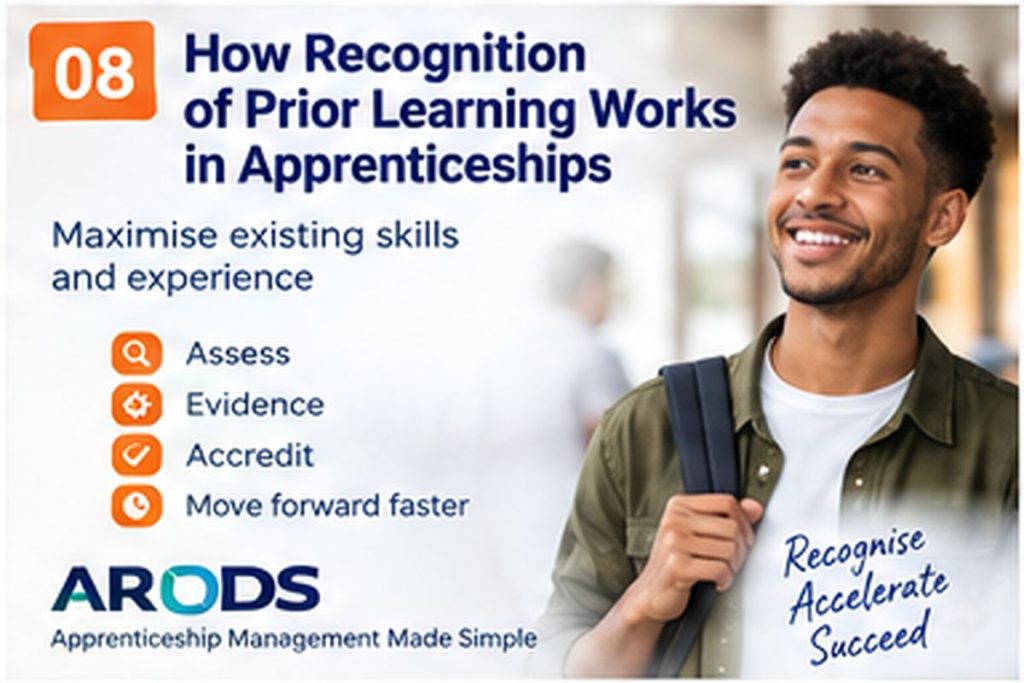
Recognition of Prior Learning, usually referred to as RPL or a Skills Scan, is an important part of apprenticeship onboarding.
The purpose is to understand what the learner already knows and can do before finalising their learning programme.
Without an effective RPL process, a provider may have incomplete information about the learner’s prior experience.
That can affect:
RPL therefore needs to be more than a box-ticking exercise.
A provider may need to:
RPL information should connect to the wider learner journey.
If it is held in a separate spreadsheet, staff may have to re-enter information elsewhere.
ARODS provides built-in RPL functionality, including online RPL forms, processing and digital signatures.
Skills scans can provide a structured way to collect information from applicants.
ARODS also provides skills-scan functionality designed to help onboarding teams identify completed and outstanding processes.
Managers should be able to see:
This helps prevent RPL becoming a hidden administrative bottleneck.
RPL should not disappear once onboarding is complete. Information about identified gaps can be useful to tutors and coaches when planning learning and monitoring progress. Connecting RPL with the wider apprenticeship management system therefore creates a more coherent learner record and reduces the need for staff to reconstruct the learner’s starting position later.
Because RPL sits early in the learner journey, delays can affect onboarding and subsequent delivery. A central workflow can show which applications are waiting for information, which assessments are complete and which decisions still require action. This gives managers a clearer view of the pipeline and helps teams deal with exceptions before they hold up the next stage.
An RPL decision should be supported by an appropriate record of how it was reached. Depending on the process, this may include information supplied by the learner, skills-scan results, previous qualifications, employment experience or other relevant evidence. Keeping the reasoning and supporting information together makes the decision easier to understand and review later.
The purpose of RPL is not simply to collect information about previous experience. The outcome should help the provider understand what the learner already knows and can do and where further learning is required. This can inform the learning plan and the way training is delivered. Any decisions about duration, content or funding should be made in line with the current applicable rules and the provider’s responsibilities.
Learners should understand what the RPL process is designed to establish and what information they may be asked to provide. Clear communication can improve completion rates and reduce delays caused by uncertainty about forms, evidence or next steps. Providers should also retain appropriate records of the assessment and decision so that the process can be understood later.
RPL should be treated as part of the apprenticeship journey rather than an isolated form.
An integrated apprenticeship management system can connect RPL information with applications, learner records and subsequent delivery processes.
Apprenticeship compliance software can help providers maintain consistent records and prepare for audit.
©2026 CyberNexus Ltd. All Rights Reserved.
Subscribe and get exclusive content and special offers.
