Discover Missing Documents Before The Inspection
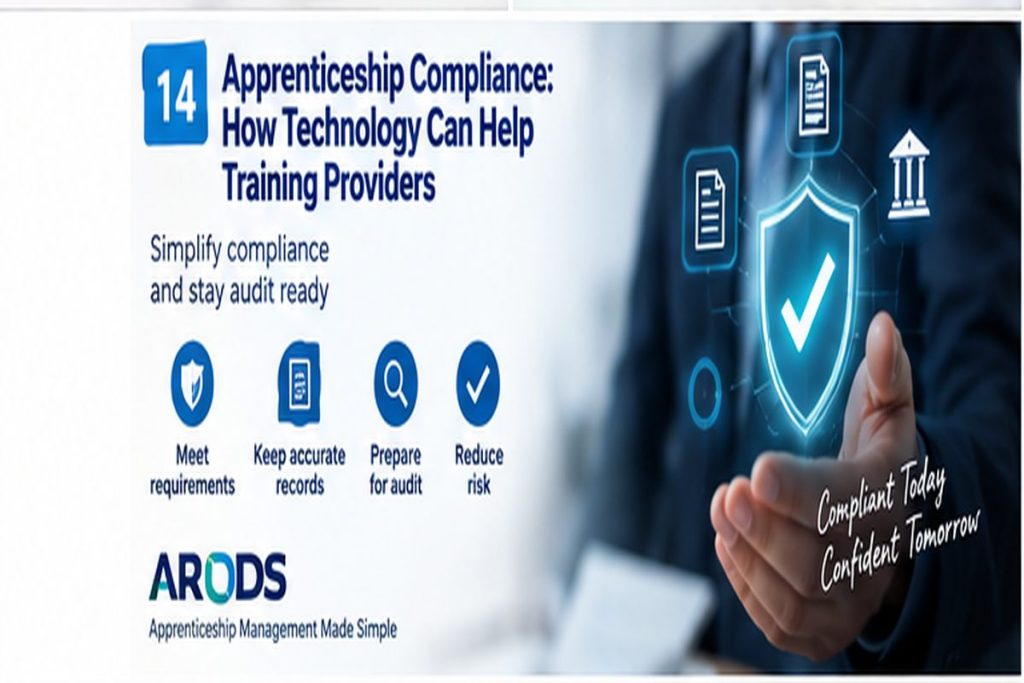
Compliance is an essential part of apprenticeship delivery.
Training providers need reliable processes for managing learner records, evidence, reviews, OTJ activity and other programme requirements.
Technology can support these processes, but it cannot replace professional responsibility.
When information is spread across:
it becomes harder to establish a consistent record.
Information can be missed, duplicated or become out of date.
An integrated apprenticeship management system provides a central environment for relevant learner information.
ARODS brings together areas including applications, RPL, OTJ, assignments, evidence and progress reviews.
Technology can also help identify exceptions.
For example:
ARODS uses early-warning functionality as part of its management approach.
Audit preparation should not be an annual panic.
A better approach is continuous record keeping.
If records are maintained throughout delivery, the provider is better positioned to demonstrate what happened and when.
A system cannot guarantee that a provider is compliant.
People still need to:
Software should support those responsibilities.
The strongest approach is to build compliance-related checks into routine delivery. Progress reviews, management dashboards, quality assurance activity and learner monitoring can all contribute to this. When records are maintained continuously, preparing for an audit or internal review becomes a matter of demonstrating an established process rather than attempting to reconstruct months of activity at the last minute.
Automated warnings can help draw attention to overdue activity, missing information or potential OTJ concerns. However, an alert is a prompt to investigate, not a conclusion. Staff should consider the underlying record and the circumstances before deciding what action is appropriate. This distinction is important because technology can identify patterns but cannot replace professional judgement or the provider’s responsibilities.
A compliance-focused system should help providers understand what information exists and where it came from. This can include learner records, review information, evidence, activity records and actions taken when issues were identified. A clear trail can make internal checks more efficient and reduce the risk of staff relying on personal spreadsheets or email folders that are difficult for others to access or interpret.
Technology is most useful when it supports a consistent way of working. Providers can define how applications, RPL, OTJ, assignments, evidence and reviews are recorded and then use the system to make those processes repeatable. Consistency makes it easier for managers to identify exceptions and for quality teams to understand how delivery is being managed across different tutors, coaches and cohorts.
Apprenticeship requirements and organisational processes can change, so providers should review their workflows periodically. Software should be configured and used in a way that reflects current requirements rather than assuming that an old process remains appropriate. Technology is most effective when it is combined with regular policy, training and quality reviews.
Compliance-related technology can also support internal quality assurance by giving authorised staff a clearer view of delivery records. Managers can review patterns, identify exceptions and select records for closer examination. This does not replace an IQA process, but it can make sampling and follow-up more structured.
Apprenticeship management software can make compliance-related processes more visible and consistent.
The greatest benefit comes when compliance is built into everyday delivery rather than treated as a separate administrative exercise.
Effective apprenticeship progress reviews provide a structured way to review progress and agree actions.
©2026 CyberNexus Ltd. All Rights Reserved.
Subscribe and get exclusive content and special offers.
