Is there a simple solution?
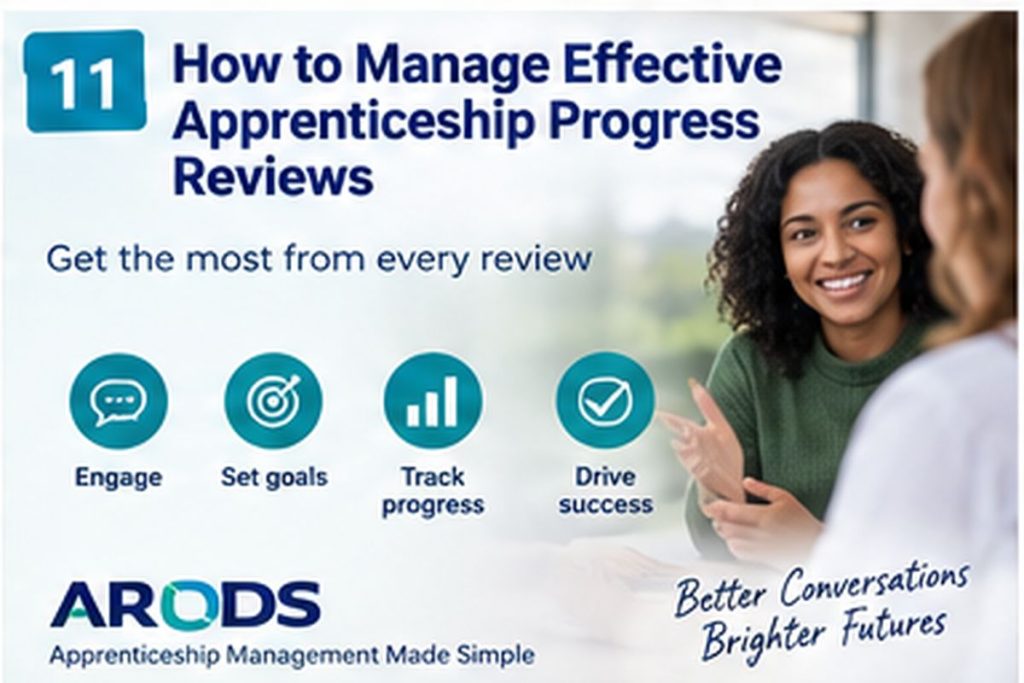
Progress reviews are an important communication point between the learner, training provider and employer.
A good review should not simply confirm that a meeting happened.
It should help everyone understand:
If reviews are managed through calendars, spreadsheets, documents and email, staff may spend significant time arranging them.
There is also a risk of incomplete records or missed follow-up actions.
ARODS allows providers to schedule individual or recurring progress reviews.
This can help establish a consistent review process.
Three-way reviews can involve:
Each participant can contribute relevant information.
A review can be an opportunity to identify:
The review should not exist independently of the rest of the apprenticeship.
Ideally, staff should be able to see learner history, assignments, evidence and other relevant information when preparing for the review.
Every review should answer:
What happens next?
Actions should be clear and attributable.
Managers can also look beyond individual meetings. Repeated overdue reviews, common learner issues or recurring actions may indicate a wider process problem. Reviewing these patterns can support staff coaching and quality improvement. Integrated apprenticeship review software makes this easier when review information is connected to the wider learner record and management dashboard.
A review is most useful when it produces clear actions. Each action should identify what needs to happen, who is responsible and, where appropriate, when it should be completed. The next review can then check whether those actions were completed. This creates a simple management cycle of discussion, action and follow-up.
The learner should have an opportunity to discuss progress, challenges and support needs. The employer can provide relevant workplace context, while the tutor or coach can explain learning activity and identify areas requiring attention. A structured review process makes it easier to capture contributions from the appropriate people and ensures that the meeting is more than a one-sided status update.
A productive apprenticeship progress review starts before the meeting itself. Participants should have access to the information they need, including recent learning activity, assignments, evidence, OTJ information and previous actions. Preparation helps the discussion focus on progress and next steps rather than spending the meeting reconstructing what has happened since the last review.
When reviews are recorded consistently, managers can compare activity across learners and teams more confidently. Consistent records also make it easier for another member of staff to understand the learner’s history if responsibilities change. This is another reason to keep progress reviews connected to the wider apprenticeship management system.
Good progress management continues after the meeting. Agreed actions should be visible to the people responsible for completing them, with appropriate reminders where necessary. This prevents actions from becoming buried in meeting notes and helps the next review begin with a clear understanding of what has happened since the previous discussion.
A review process should be structured without becoming unnecessarily complicated. Templates and standard prompts can help ensure that important topics are covered while still allowing the discussion to reflect the learner’s circumstances. The objective is a meaningful conversation, not simply completion of a form.
Effective progress reviews are not simply meetings.
They are a management mechanism for maintaining learner progress and communication between the people involved in the apprenticeship.
ARODS integrates two-way and three-way review processes into its wider apprenticeship management environment.
©2026 CyberNexus Ltd. All Rights Reserved.
Subscribe and get exclusive content and special offers.
